

Kiên tâmtạo giá trị
Tran Hung Dao Bridge: Coordinating Multiple Work Fronts Within an Integrated Construction Sequence
At the Tran Hung Dao Bridge construction site, more than 40 management personnel and nearly 400 workers are simultaneously carrying out multiple work items, including piling, pier construction, box girder works, approach roads, and the fabrication and installation of steel arches. Dividing the work into specialized construction fronts allows different stages to proceed in parallel while reducing waiting time between operations.
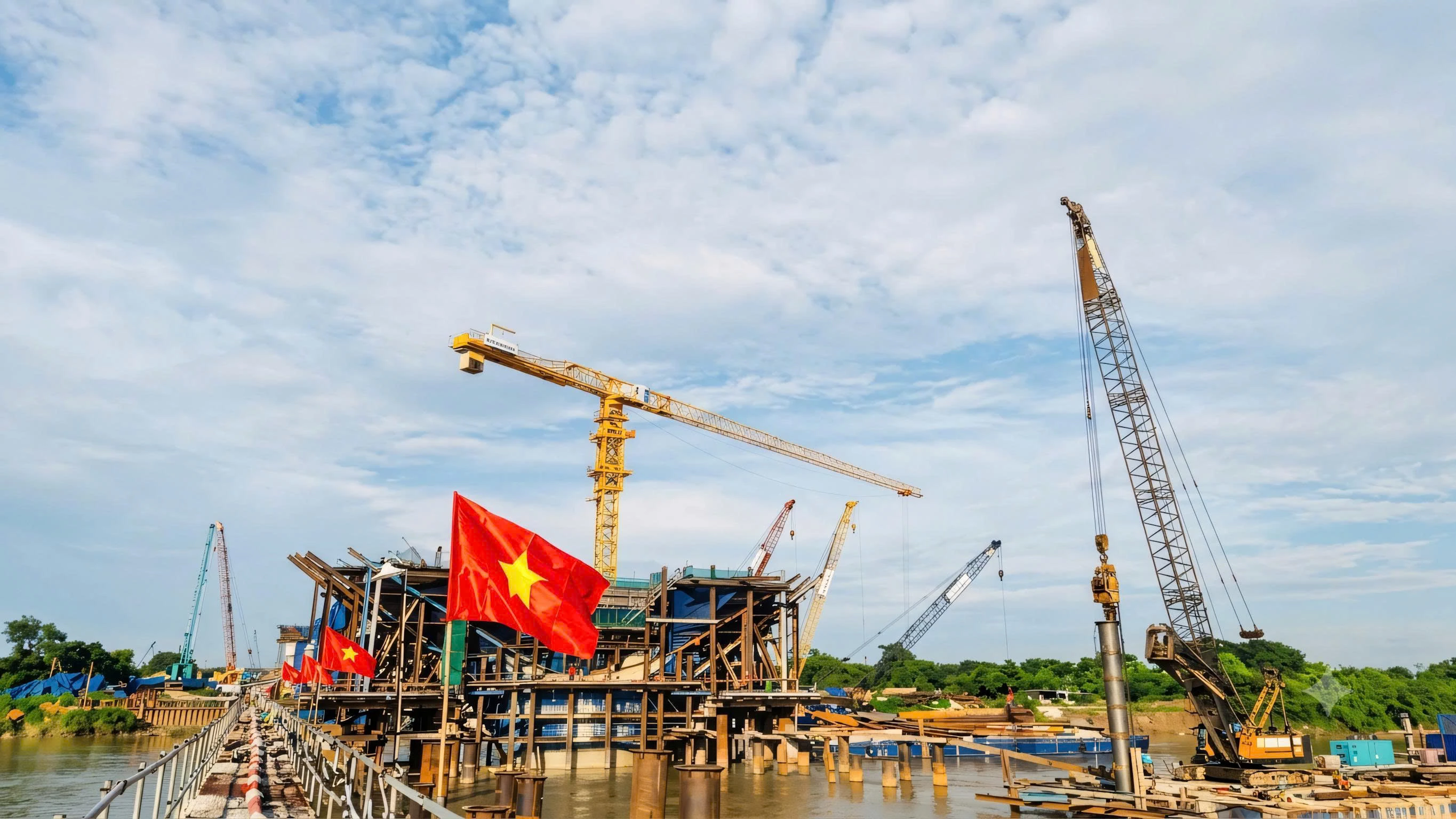
Construction of the main piers TC5 and TC6 at Tran Hung Dao Bridge, among the project's key work fronts.
The project's specific conditions place considerable demands on coordination among work fronts. Machinery and equipment are deployed under a continuous three-shift, four-team system, while manpower is adjusted according to each construction stage and actual output. The site management team directly oversees individual work fronts, with technical personnel and foremen closely monitoring on-site activities to control work sequences, resolve interface issues and minimize waiting time between operations.
During peak construction periods, coordination meetings, shift briefings and progress updates are conducted regularly. Information from the site is continuously reported to the project management team, enabling timely adjustments to manpower, equipment and construction sequences when necessary. This approach helps maintain a stable pace of construction while controlling factors that could affect the critical path, supporting the target completion date of June 30, 2027.
On a large-scale project, construction efficiency depends not simply on the speed of individual work fronts, but on the ability to integrate them into a coordinated and continuous workflow. This requires effective management, schedule control and efficient deployment of the combined workforce and equipment on site.
Hong Ha Bridge: Preparing Resources for Simultaneous Construction Activities
At Hong Ha Bridge, the project is transitioning toward a phase requiring greater resource mobilization. As the substructure of the main bridge approaches completion, the necessary conditions for superstructure construction must also be prepared in a coordinated manner.
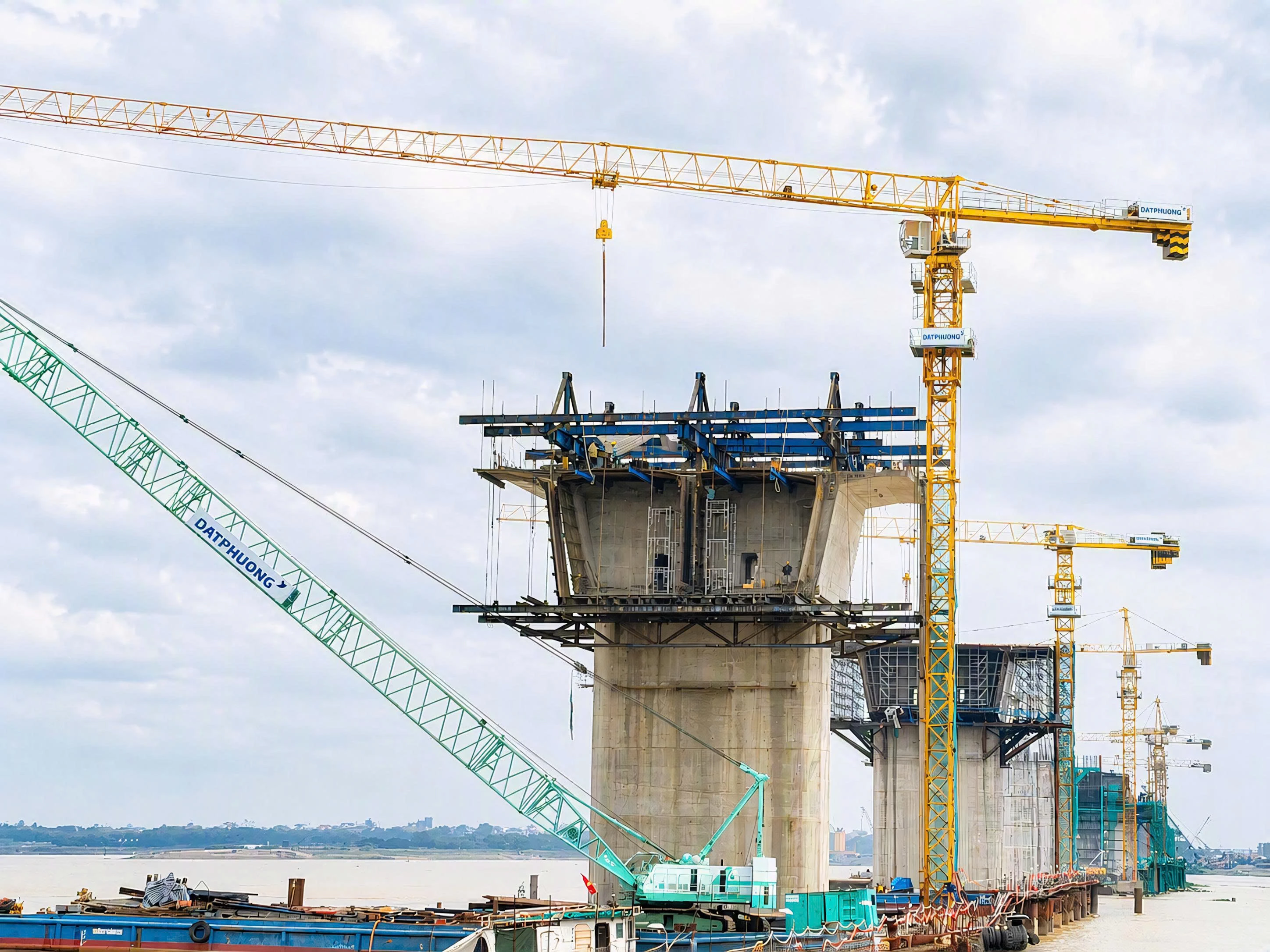
Construction of the K0 segment at pier P44 and installation of the form traveler system at pier P43 on Hong Ha Bridge.
The substructure of the main bridge is scheduled for completion in September 2026. Subsequently, six form traveler systems will be deployed at piers HH-P038 through HH-P044. Operating six balanced-cantilever construction fronts simultaneously requires not only sufficient equipment and manpower, but also effective site layout planning, material supply, technical supervision and coordination among the work fronts.
Against a backdrop of material shortages, the project management team must continuously balance the needs of individual construction locations against the overall schedule. Materials are prioritized according to the actual progress of each work front, helping prevent one operation from being suspended while other construction conditions are already in place. With all six form traveler systems operating simultaneously, technical control requirements also become more stringent. Monitoring is conducted at each location, while technical personnel are assigned to individual work fronts to continuously supervise construction and promptly address deviations. The site maintains 24/7 operations, including during public holidays, supported by carefully organized shifts and handovers.
The target of achieving technical opening to traffic by July 31, 2027, therefore requires not only a high construction pace but also close alignment across every stage, from material and equipment preparation and site readiness to quality assurance and schedule control. For projects involving multiple simultaneous work fronts, management capabilities are demonstrated by the ability to maintain workflow continuity and minimize bottlenecks throughout construction.
Phu Quoc Urban Rail Project: Adapting Quickly to On-Site Conditions
In Phu Quoc Special Zone, island construction conditions combined with demanding schedule requirements call for a flexible approach to project organization. From the outset, the project management team adopted the working principle of “around the clock, with no days off,” developing plans for personnel, equipment and materials from the beginning of the project.
Section 1 of the urban rail line has been divided into six construction fronts at the Km14+000 bridge and the Km17+000 tunnel, with specific workloads and schedules established for each area. This arrangement enables the project management team to monitor output by work front while proactively reallocating resources when necessary.
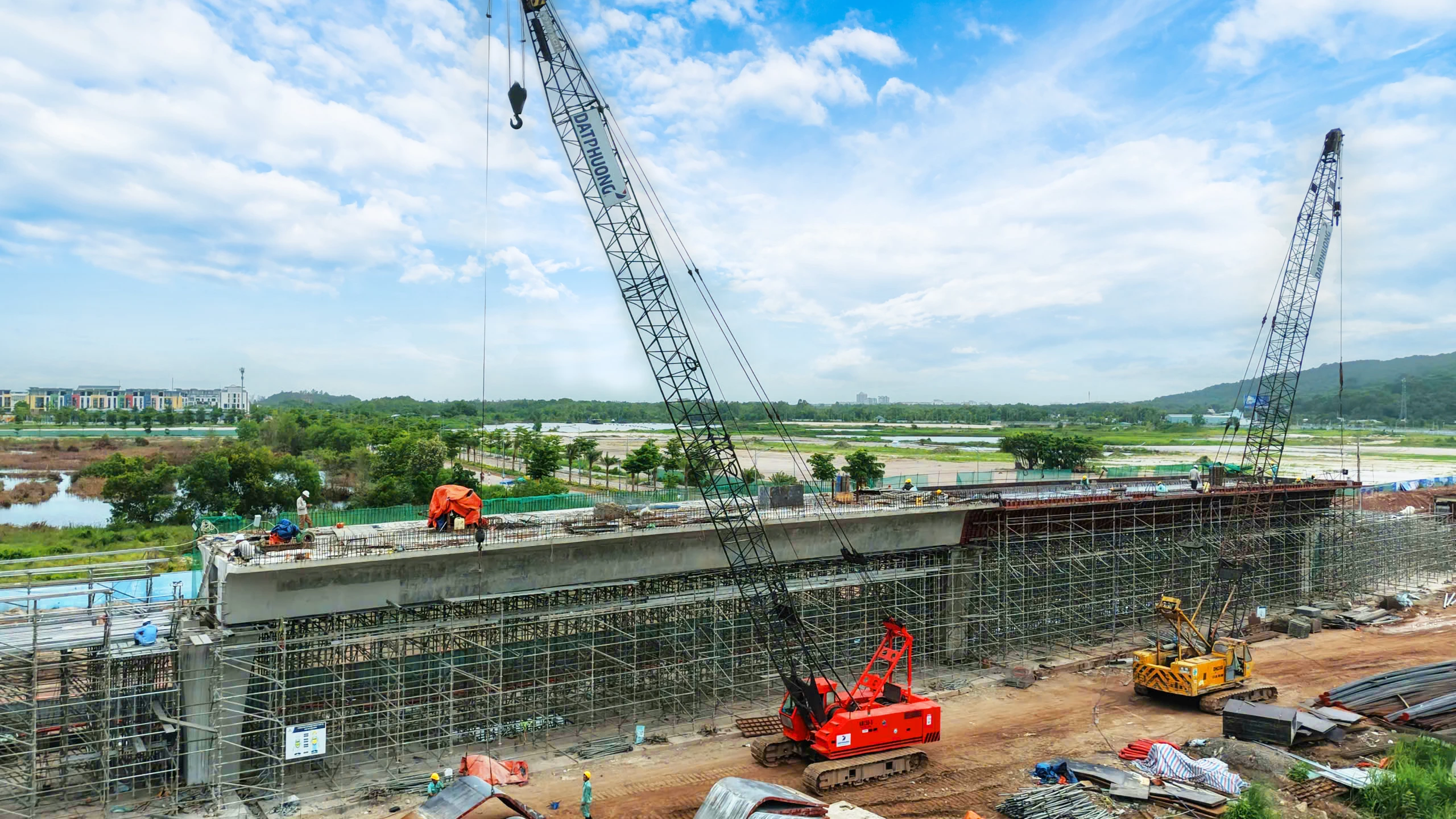
Organization of box girder casting for the Km14+000 bridge under Section 1 of the urban rail project.
Actual site conditions have also presented challenges that cannot be resolved simply by increasing manpower. In the Km17+000 tunnel area, localized geological conditions differ from those described in the design documents, with mud pockets at the excavation pit bottom and rock arising from site grading works. These factors require the technical team to reassess actual ground conditions and adjust construction methods accordingly.
The solutions implemented include lowering the working ground level and treating soil mixed with rock, while maintaining technical controls for sheet pile vibratory driving and the installation of structural steel sections in accordance with the design. At the same time, resources are flexibly reallocated among work fronts, and construction areas are organized in a rolling sequence to facilitate continuous handover to subsequent contractors or teams.
In infrastructure construction, unforeseen conditions cannot be eliminated entirely, particularly on projects involving complex geology, site constraints and logistics. The key lies in the ability to identify and assess emerging issues and implement appropriate solutions promptly, thereby limiting their impact on the schedule and related construction activities.
This is also an important dimension of a contractor’s capabilities: not only executing works in accordance with approved designs and plans, but also managing changing site conditions, adjusting construction methods within permitted limits and deploying the right resources at the right time.
